Bird House: A Floral Garden Embroidery Design Review
As a designer who’s stitched hundreds of client projects—from boutique baby onesies to Etsy best-selling tote bags—I opened Bird House expecting charm. What I found was something more grounded: a quiet, cohesive floral garden motif that breathes like real embroidery, not just vector art on screen. It’s not flashy. It doesn’t scream “trend.” But it *works*—especially when you’re stitching for someone who values softness, intention, and handmade warmth.
First Impressions: Gentle, Balanced, Ready for Fabric
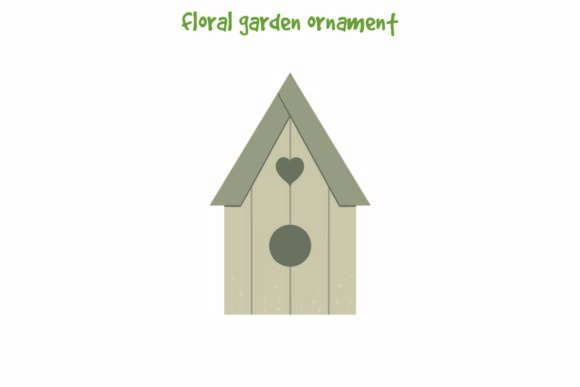
The moment I loaded the SVG into my digitizing software, I noticed how naturally the composition sits within a vertical rectangle—ideal for center-chest sweatshirt embroidery or pillow cover placement. The tree anchors the bottom, flowers bloom upward and outward in gentle asymmetry, and the birdhouse perches just off-center, like a quiet invitation rather than a focal command. There’s no aggressive detail overload: petals are suggested, not outlined; leaves have subtle variation, not rigid repetition. That’s huge for real-world embroidery. Overly tight vectors often translate to stitch crowding, thread breaks, or fuzzy fill areas—especially on cotton twill or linen tea towels. Bird House avoids that trap. Its layout feels like it was designed *for thread*, not just pixels.
Real Project Test: A Custom Embroidered Kitchen Towel for a Local Bakery
Last week, I used Bird House on a set of 100% cotton flour-sack towels for “Hearth & Vine,” a small-batch bakery launching gift bundles. We chose light sage fabric with ecru thread. Why it succeeded: the design’s open negative space let the towel’s natural texture show through between stitches—no heavy fill stitch drowning the weave. The floral elements read clearly at 4.5” wide (hoop size: 5x7”), and the birdhouse’s roof detail held up beautifully in satin stitch without puckering. Customers commented on how “light” and “airy” the embroidery felt—not stiff or commercial. That’s the difference between a graphic dropped onto fabric versus one that *belongs* there.
Where Bird House Shines—and Where It Asks for Thought
- Custom apparel: Works cleanly on crewneck sweatshirts (back yoke or left chest), especially with mid-weight stabilizer. Avoid placing directly over seams or side panels where stretch distorts stitch alignment.
- Baby embroidery: Soft enough for onesies and burp cloths—but test first on knit fabric. The floral density is low enough to avoid stiffness, but always pair with tear-away + cut-away combo stabilizer for stretchy cotton jersey.
- Embroidered patch: Excellent candidate. Clean outer edges, moderate height, and balanced weight make it stable for iron-on or sew-on backing. Just confirm your patch maker can handle the SVG or EPS cleanly—some auto-digitizers oversimplify curved stems.
- Tote bag design: Ideal for front-panel placement on canvas or duck cloth. The 1920×1280 px canvas gives room to scale down without losing clarity—even at 3.75” wide, petal shapes remain legible.
- Holiday or wedding gifts: Subtle enough for year-round use, yet evokes spring and nesting—perfect for baby showers, housewarming towels, or bridal aprons. No seasonal clichés. Just quiet, lasting charm.
Design Nuances That Matter in Production
Because Bird House is delivered as an Illustration asset—not a pre-digitized machine embroidery design—you’ll need to digitize it yourself or work with a digitizer. That’s not a drawback—it’s flexibility. But it means paying attention to what the vector reveals (and hides). The AI and EPS files maintain clean curves and grouped layers, which speeds up digitizing. The JPG and PNG are great for mockups and Etsy listing previews, but don’t rely on them for stitching—they’re reference only.
I checked stitch density by converting a test version: the flower clusters use moderate fill stitch spacing (not too dense), and the tree trunk reads well with alternating satin and running stitch segments. That’s smart for durability—less thread buildup means less risk of fraying after repeated washing. Still, if you’re embroidering on dark fabric, run a black-and-white mockup first. Some delicate vine lines may need slight stroke thickening to stay visible.
What to Do Before You Stitch (or Sell)
- Test on scrap fabric matching your final product’s weight and texture—especially if using textured linen, terry cloth, or lightweight rayon.
- Confirm hoop size compatibility. At full 1920×1280 px scale, this design will exceed most standard hoops—so plan your intended finished size early.
- Inspect small details: the birdhouse door, tiny flower centers, and leaf tips. These may need manual cleanup in digitizing software to prevent skipped stitches or thread nests.
- Check licensing. Since Bird House is sold as a Graphics asset, verify whether your use—especially selling finished embroidered products on Etsy or at craft fairs—falls within permitted commercial terms.
- Compare thread color contrast on both light and dark backgrounds. Ecru on sage worked; white on navy might vanish in the foliage unless you adjust stitch density or add underlay.
- Use appropriate stabilizer: medium cut-away for knits, tear-away for stable wovens, and fusible for lightweight silks or voiles.
Why This Design Builds Trust—Not Just Texture
When customers see a handmade product, they’re reading for care—not just cuteness. Bird House communicates care through restraint. It doesn’t try to do everything. It doesn’t cram in extra butterflies or scripty banners. It offers rhythm, breathing room, and botanical honesty. That translates directly to perceived value: a customer paying $48 for an embroidered pillow cover isn’t just buying thread and fabric—they’re buying intention. And Bird House delivers that quietly, consistently.
For Etsy sellers and small shop owners, it’s also brand-flexible. Pair it with minimalist typography for a modern nursery line—or layer it with hand-drawn labels for a rustic kitchen collection. It supports your voice instead of competing with it.
If you’re evaluating Bird House for your next embroidery project, ask yourself: Does this feel like something people will want to hold, gift, hang, or wear—not just scroll past? In my 12 years of designing for makers, that’s the only question that matters. And for this one, the answer is yes.